

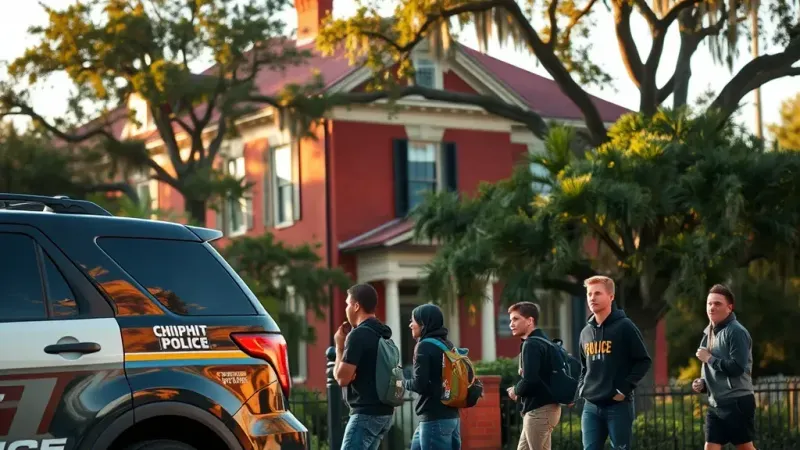
WCTV reported that the Florida State University Chi Phi fraternity is facing an active investigation regarding allegations of hazing. The FSU Division of Student Affairs received multiple incident reports dating back several weeks concerning the organization. According to university information, a university housing report dated Oct. 21 contained the most recent misconduct information regarding the situation on campus.
Amy Farnum-Patronis provided further updates on the university's response, confirming that the FSU police department is leading the hazing investigation. In addition to the police investigation, Amy Farnum-Patronis noted that the university placed the Chi Phi fraternity on a partial Interim Health and Safety Action. Despite the serious nature of the allegations and the ongoing investigation, Amy Farnum-Patronis confirmed that no students were injured or hospitalized during the incident.
With these recent administrative actions, Chi Phi is currently the only FSU fraternity not in good standing. Other Greek organizations at the university have also faced disciplinary measures in recent years. For instance, the Kappa Gamma Delta chapter remains on disciplinary probation until April 2027. Meanwhile, another campus organization, Sigma Lambda Beta, successfully left probation in August following a 2024 hazing incident.
The issue of hazing at universities carries deep historical and legal significance in Florida, anchored by past legislation and tragic events. The Chad Meredith Act took effect in 2005, making hazing a criminal offense in the state. More than a decade later, Andrew Coffey died following a 2017 fraternity hazing incident. Documentation from the case noted that Andrew Coffey had a blood alcohol level of 0.447 during his autopsy. Following that tragedy, nine members of Pi Kappa Phi were criminally convicted in the Coffey case. In response to these ongoing concerns across the state, the Florida legislature unanimously passed Andrew's Law in 2019.
Discussing the shocking nature of fraternity misconduct allegations, an unnamed source told WCTV, "I’ve seen some very bad things, but if it turns out to be true that they tied up a pledge, put him in the trunk of a car, made him consume cocaine and alcohol, that’s one of the worst ones I’ve ever heard. That’s a new one on me. I’ve never heard of that before."
Emphasizing the devastating personal impact on families affected by these campus tragedies, Bianchi told WCTV, "Ask any parent who has lost a son to hazing and they will all tell you the same thing. We’d much rather have our son back than prosecute the person who did it"