

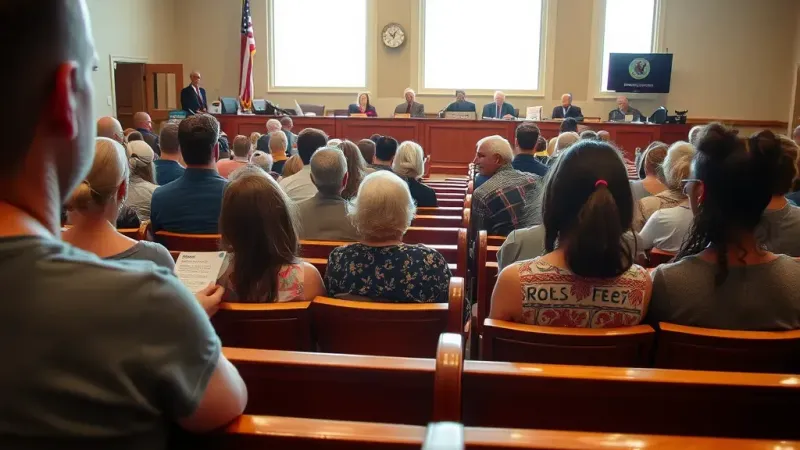
Tallahassee city commissioners recently discussed ending the city immigration enforcement agreement, bringing attention to a federal program with a long administrative history. The framework underpinning these partnerships dates back several decades, specifically when the Illegal Immigration Reform and Immigrant Responsibility Act added Section 287(g) in 1996. Over the years, Immigration and Customs Enforcement (ICE) has relied heavily on this legislative mechanism to forge partnerships nationwide. According to the available data, ICE has signed 2,807 agreements across 38 states and two territories.
Locally, the operational footprint of this program within municipal law enforcement remains quite minimal. The Tallahassee Police Department has only one trained officer participating in the initiative. Despite this limited local departmental involvement, Tallahassee city commissioners chose to address the agreement directly, debating the future of the city immigration enforcement agreement during recent municipal meetings.
During these city commission discussions, Mayor Pro-Tem Jack Porter expressed clear readiness to move away from the partnership. Mayor Pro-Tem Jack Porter told Homepage, "I'm ready to move forward to exit the 287(g) agreement."
The debate has also drawn vocal responses from community organizations observing the impacts on local residents. Aedan Bennett, TIRA President, commented extensively on community fear and mistrust surrounding the situation. Aedan Bennett told Homepage, "Almost two years of this fight, we've talked to so many people in neighborhoods, Latino people, Latino immigrants, and non-Latino immigrants who have just expressed fear and mistrust in our police force, and I think that that's valid."
Meanwhile, these municipal deliberations are taking place against a backdrop of significant federal and state actions regarding immigration policy. At the federal level, President Donald J. Trump issued Executive Order 14159 on January 20, 2025. This executive directive has intersected with ongoing debates over local cooperation with federal immigration authorities.
In the wake of these discussions and federal orders, state leaders have stepped forward to caution local municipalities about potential legal ramifications. Governor-Elect Byron Donalds warned that cities must comply with federal and state laws. Adding to the state-level pressure, Attorney General James Uthmeier discussed local statutory obligations during an appearance in Orlando, emphasizing the legal expectations surrounding municipal adherence to these state and federal statutes.